Beautiful Guadalest
Spain's best-preserved medieval town?
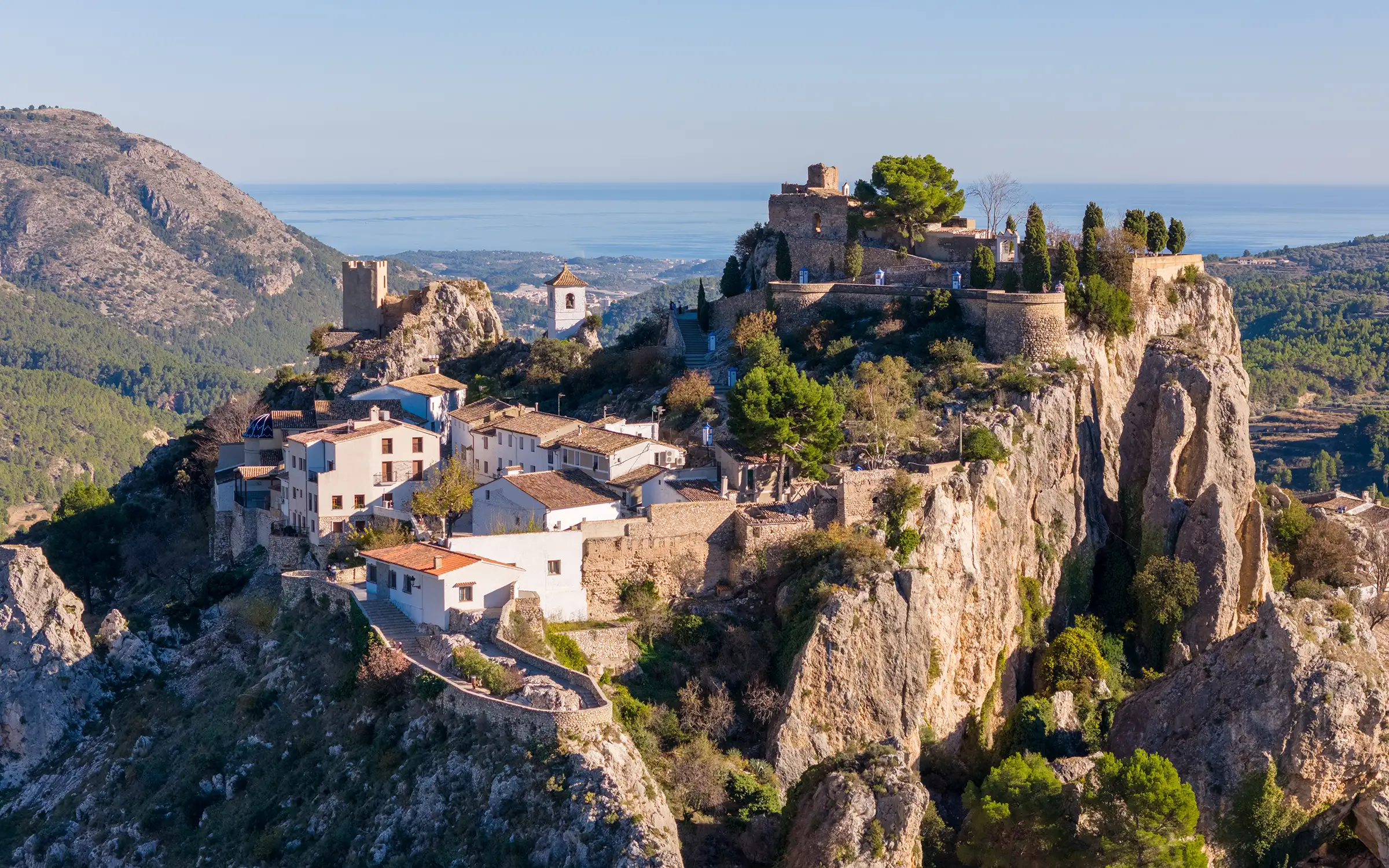
Approx. 22 kilometers up in the mountains above Altea you will find the gorgeous, ancient, small village of Guadalest (or El Castell de Guadalest as it is actually called). Perhaps Spain's best-preserved medieval town. An old village of Arabic origin, with fortifications from the 11th century. Reportedly one of Spain's most visited tourist destinations. And THAT we understand very well. Because you will have to search far and wide for such a charming town. A town with approx. 200 inhabitants, the rest of us are probably tourists. And there were quite a few of us.
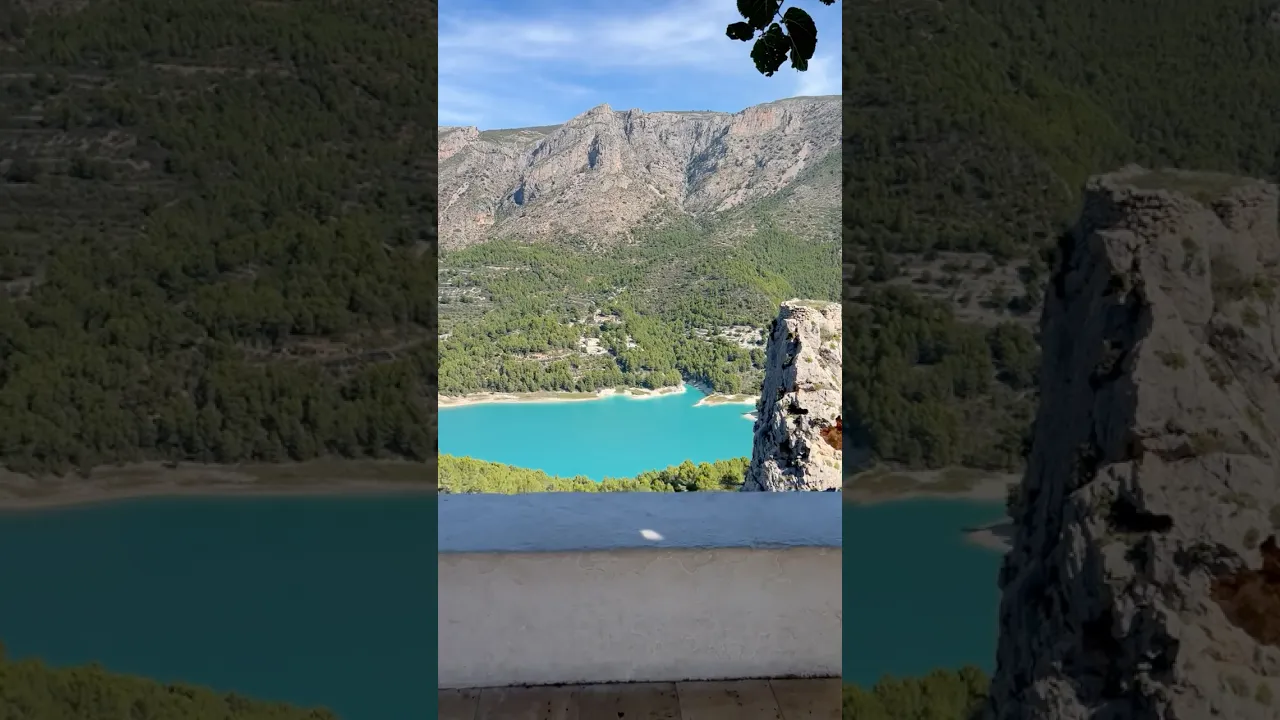
The village, which clings to the mountain, has a great view, including over an azure-blue water reservoir, also called Embalse Guadalest. The water comes from the Guadalest River, a tributary of the Algar River (Fonts de l’Algar). The reservoir supplies the Marina Baixa region with water.
Parking
At the entrance to the town there are plenty of parking spaces. We arrived during the Norwegian autumn holidays, and although we weren't exactly the only tourists, it was still relatively easy to find a parking space. There were several attended parking spaces right at the entrance, it cost us 2 Euros per day.
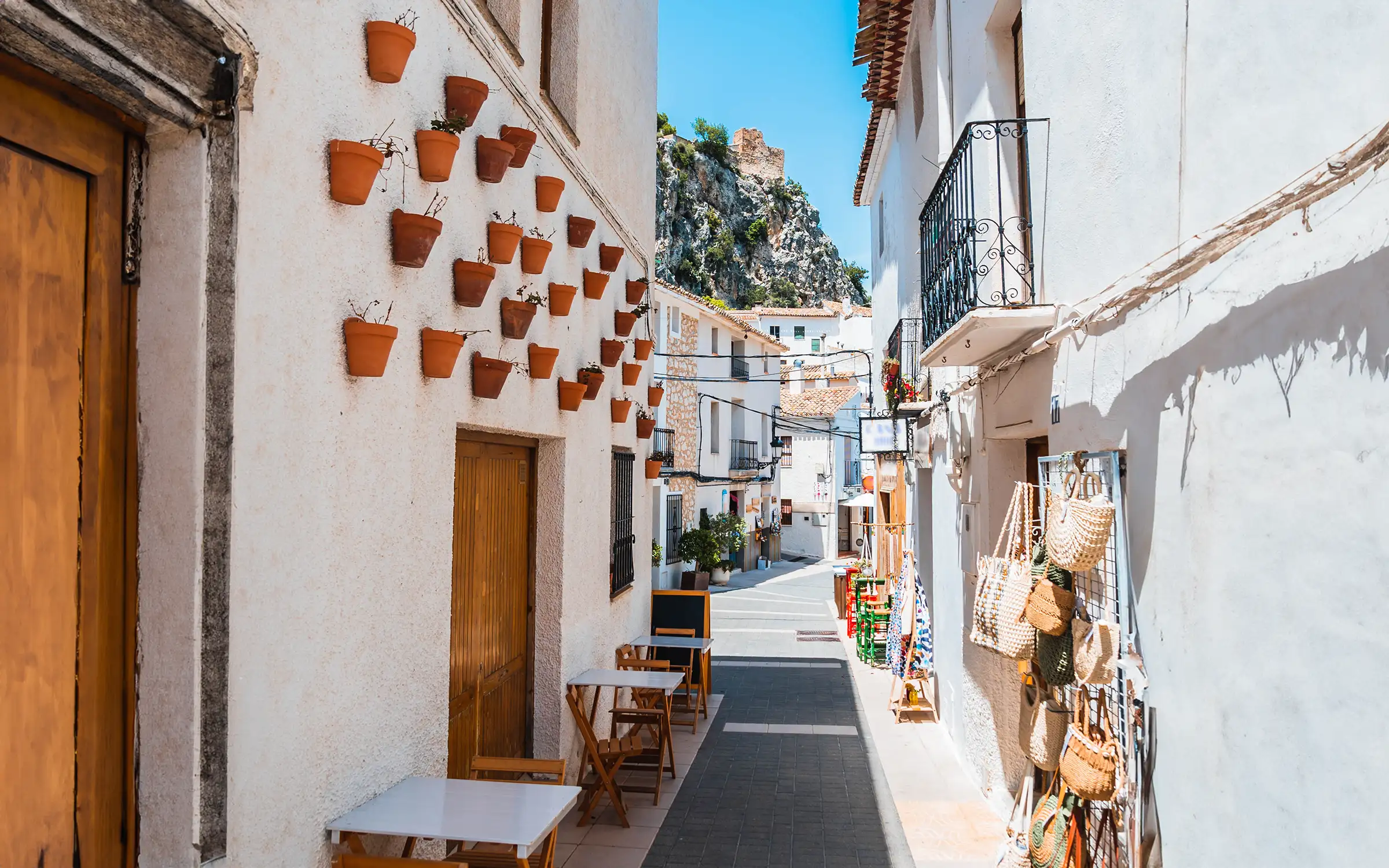
The first thing that meets you at the entrance to Guadalest is the narrow, cobbled small streets of the old town around the castle. Local handicrafts, honey, souvenirs, clothes and bags are offered here. Lots of bags. And we also bought some of them to take home with us, perfectly fine quality.
Two castles
In Guadalest there are actually two remarkable castles: Castillo de San José and Castillo de la Alcozaiba. Both castles have a long history and have been important fortifications in the region. They are located at strategic points and provide fantastic panoramic views of the Guadalest Valley and the surrounding landscape. Although the castles today are partly in ruins, they are important tourist attractions and give visitors the opportunity to explore the region's rich history and architectural heritage.
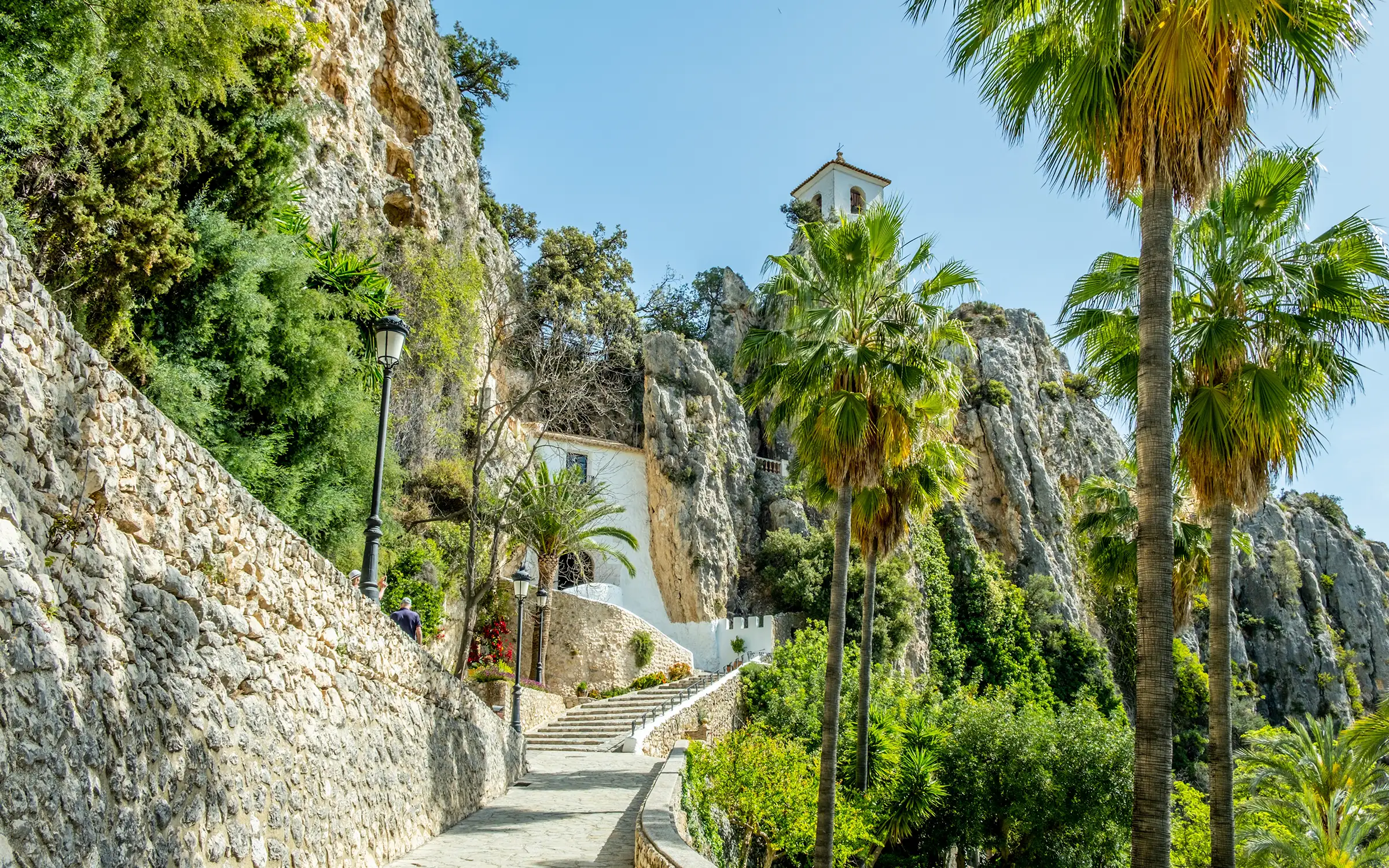
Guadalest is perhaps best known for photos of the clock tower of the castle Castillo de la Alcozaiba, most people who visit the town take photos of this tower. So did we!
Tunnel
To reach both Castillo de la Alcozaiba and Castillo de San Jose, one must go through a 15-meter-long tunnel in the mountain; Portal de San Jose. On the other side of the tunnel, there are cobbled steps all the way up to the cozy little square Plaza de San Gregorio. A lovely square surrounded by many small shops and restaurants. In the middle of the square you will find a great fountain, and on one side of the square you have a fantastic view of the surrounding area, and the aforementioned water reservoir. Great atmosphere, lovely colors and lovely buildings.
Several fun museums
The small town houses several museums, a total of 8 (!). Including the 'Museo Etnologico' which shows what everyday life in and around Guadalest has been like from previously and up to the present day, as well as 'Casa Orduña'. The latter shows the history of the Orduña family who were administrators of Guadalest from the 17th century until 1934, when the last family member died. The house was built after the earthquake in 1644, and gives a good insight into what an upper-class home looked like at that time. Other museums in Guadalest are the Doll Museum, Salt & Pepper Shaker Museum, Micro-giant Museum, Historical Vehicle Museum and Torture Museum.
We had two youngsters with us on our trip to this lovely town, so our choice of museum fell on the 'Micro-giant Museum'. An entire museum filled with an impressive collection of microscopic artworks and detailed models of all kinds of famous places and people. And we are really talking miniature here! Because here you can see, among other things, the Statue of Liberty inside the eye of a needle, the Eiffel Tower on top of a pinhead, and wine bottles made from grains of rice! It is said that the artist Manuel Ussá works without breathing to avoid disturbing the delicate and intricate details of his small sculptures and paintings.
Places to eat
In and around Guadalest there are several restaurants: Restaurante L’Hort, Restaurante Casa Paco, Restaurante El Riu, Restaurante Viva España, Bar Restaurant El Salat and Restaurante Abdet.
We chose L’Hort, with a fantastic view of the valley and the clock tower. The food was perfectly fine, the service impeccable, very reasonable price level. Lovely to sit outside and enjoy both the food and the street life outside the restaurant.
Facts about Guadalest
Official name: El Castell de Guadalest
Country: Spain
Region: Valencia (Alicante province)
Number of inhabitants: Approx. 200–220
Known for: Mountain village, castle, spectacular views, turquoise lake, many small museums
Altitude: Approx. 595 m above sea level.
History: Moorish origin, castle from the 11th century
Special feature: Only one entrance to the old town – through a tunnel in the mountain
Distance to the coast: Approx. 20 km from Benidorm
Area: Small settlement (very small village)
How to get to Guadalest
The trip from Altea/Albir to Guadalest takes a little over half an hour by car. You can see the route here. Public transport can be slightly complicated, but it is possible to book a place on organized tours.
Summary
We had a lovely day in Guadalest, and stayed there for 4-5 hours including lunch. A place we would gladly go back to. Recommended!